
Dhanteras is celebrated to welcome prosperity, pray for good health and mark the beginning of the Diwali festival. Dedicated to Lord Dhanvantari, associated with Ayurveda and healing, and connected with the worship of Goddess Lakshmi and Lord Kubera in many traditions, Dhanteras reminds people that well-being and prosperity are both important in life.
Also known as Dhantrayodashi or Dhanvantari Trayodashi, Dhanteras falls on the thirteenth lunar day of the dark fortnight during the Hindu calendar’s Diwali period. Families traditionally clean and decorate their homes, light diyas, perform prayers and purchase auspicious items such as utensils, gold or silver according to their customs.
But why is Dhanteras celebrated, what is the story behind it, and why do people buy gold on this day? Understanding its legends and traditions reveals why this festival remains an important part of India’s cultural and religious celebrations.
Table of Contents
Why Is Dhanteras Celebrated?
Dhanteras is celebrated to seek blessings for health, wealth, prosperity and well-being. Its significance comes from religious traditions associated with Lord Dhanvantari, Goddess Lakshmi and Lord Kubera, along with popular stories that explain the custom of lighting lamps and making auspicious purchases.
The name Dhanteras combines dhan, meaning wealth, and teras, referring to the thirteenth lunar day. The festival is therefore strongly associated with prosperity, but its meaning extends beyond material possessions.
Lord Dhanvantari is revered in Hindu tradition as a divine figure associated with Ayurveda and healing. Worshipping him reflects the importance of health and the wish for a healthy life. Goddess Lakshmi represents wealth and abundance, while Lord Kubera is traditionally associated with riches and guardianship of wealth.
For many families, Dhanteras is an opportunity to express gratitude, prepare for Diwali and begin the festive period with positive intentions. The combination of prayer, household preparation and family traditions gives the day its lasting cultural significance.
The Story of Lord Dhanvantari and Dhanteras
One of the best-known stories associated with Dhanteras comes from the Samudra Manthan, or the churning of the cosmic ocean, described in Hindu sacred literature.
According to this tradition, the devas and asuras churned the ocean in search of amrita, the divine nectar associated with immortality. During this cosmic event, Lord Dhanvantari emerged carrying a vessel of amrita. He became closely associated with Ayurveda and the knowledge of healing.
His appearance is remembered during the Dhanteras period, and devotees pray for good health, protection from illness and well-being for their families.
This story helps explain why Dhanteras is not solely a festival about buying gold or accumulating wealth. It also highlights the value of health, healing and a life lived with care. Material prosperity has limited meaning without the well-being needed to enjoy it.
The Legend of King Hima’s Son
Another popular legend explains the tradition of lighting lamps on Dhanteras.
According to the story, a young prince, the son of King Hima, was predicted to die from a snakebite on the fourth night after his marriage. When his wife learned about the prediction, she decided to protect him. She kept him awake throughout the night, arranged gold and jewellery near the entrance of their chamber, and filled the space with lamps.
She also sang songs and told stories to keep her husband alert. When Yama, the god of death, arrived in the form of a serpent, the brightness of the lamps and the glittering objects prevented him from approaching easily. The prince survived the night, and the prediction was overcome.
This popular legend is associated with the custom of lighting lamps and with the belief that Dhanteras is an auspicious occasion for protection and well-being. It also explains why some traditions connect the day with Yama Deepam, the offering of a lamp in remembrance of Yama.
The story should be understood as a traditional religious legend rather than a historical account or a guarantee against misfortune.
Why Do People Buy Gold on Dhanteras?
Buying gold, silver, utensils and other household items is one of the most recognizable Dhanteras traditions. Many families believe that making an auspicious purchase on this day symbolizes welcoming prosperity and good fortune into the home.
Gold and silver are valued for their cultural associations with abundance, stability and celebration. New utensils and practical household items are also popular purchases, reflecting the tradition of preparing the home for the festive season.
However, buying expensive items is not a requirement for celebrating Dhanteras. Families can observe the day through prayers, lighting diyas, cleaning their homes or purchasing something modest and useful within their budget.
The meaning of the tradition lies in the intention behind the purchase, not in its price. Dhanteras can be celebrated meaningfully without taking on debt or making financial decisions that are unsuitable for one’s circumstances.
Why Is Lakshmi Puja Performed on Dhanteras?
Goddess Lakshmi is associated with prosperity, abundance and good fortune in Hindu tradition. Many families worship her during the Diwali period, including on Dhanteras, to express gratitude and pray for well-being in the coming year.
A popular folk story tells of Goddess Lakshmi accompanying Lord Vishnu to Earth. In the story, she visits a farmer and brings prosperity to his household. When the time comes for her to leave, the farmer wishes her to remain. Lakshmi promises to return, and the tale becomes associated with welcoming the goddess through cleanliness and the lighting of lamps.
This story is one of several traditional explanations for the relationship between Lakshmi, household preparation and Dhanteras. Practices vary, and some families perform their main Lakshmi Puja on Dhanteras while others observe it primarily on the main Diwali evening.
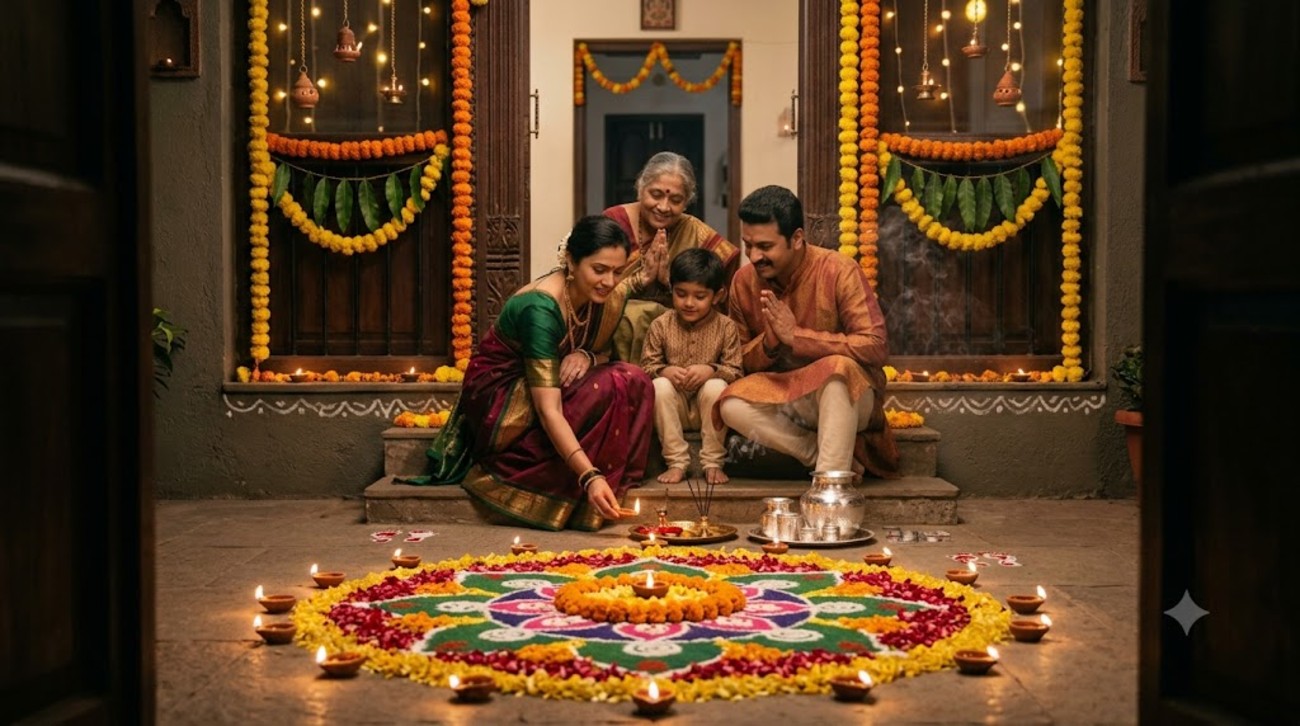
Devotees may clean their homes, decorate entrances with rangoli and flowers, light diyas and prepare a prayer space. The emphasis is on welcoming prosperity with devotion, gratitude and positive intentions.
Dhanteras Rituals and Traditions
Dhanteras celebrations usually begin with preparing the home for the wider Diwali festivities. Families clean their living spaces, decorate entrances and arrange lamps or flowers to create a welcoming atmosphere.
In the evening, many households perform puja according to their family traditions. Prayers may be offered to Lord Dhanvantari, Goddess Lakshmi and Lord Kubera. Some families light a lamp dedicated to Yama, following their regional customs.
Shopping is another important part of the day. Markets become busy with people buying jewellery, utensils, decorative items, clothes and gifts. Sweet shops and local businesses also see increased activity as families prepare for Diwali.
Dhanteras is an opportunity to spend time with family, visit markets, share festive food and prepare for the days ahead. The precise rituals differ across regions, so following local customs or family guidance is often the best approach.
How to Celebrate Dhanteras at Home
A meaningful Dhanteras celebration does not require elaborate arrangements. Simple activities can help families observe the occasion while keeping its spiritual and cultural significance at the centre.
Start by cleaning and organizing the home. Decorate the entrance with a toran, flowers or a simple rangoli, and arrange clay diyas in safe locations. If your family observes puja, prepare the necessary items in advance and follow your customary rituals.
You can also purchase a useful household item or a small festive gift if it suits your budget. Involving children in decorating the home or explaining the story of Lord Dhanvantari helps pass cultural traditions to the next generation.
For more inspiration for the wider festival, read our guide on how to celebrate Diwali.
Dhanteras and the Five Days of Diwali
Dhanteras marks the beginning of the traditional five-day Diwali period for many families. It is followed by Naraka Chaturdashi or Choti Diwali, the main Diwali celebration, Govardhan Puja or Bali Pratipada, and Bhai Dooj.
The names, dates and rituals associated with individual days may differ according to regional calendars and traditions. Together, these celebrations bring families and communities together through prayers, decorations, festive meals and acts of generosity.
To understand how Dhanteras fits into the complete festival, explore our guide to the five days of Diwali.
Frequently Asked Questions About Dhanteras
1. Why is Dhanteras celebrated?
Dhanteras is celebrated to pray for health, wealth, prosperity and well-being. It honours Lord Dhanvantari and is associated with Goddess Lakshmi, Lord Kubera and traditions of lighting lamps and making auspicious purchases.
2. What is the story behind Dhanteras?
Two popular stories are associated with Dhanteras: Lord Dhanvantari’s appearance during the Samudra Manthan carrying amrita, and the legend of King Hima’s son, whose wife lights lamps and keeps him awake to protect him from a predicted snakebite.
3. Why do people buy gold on Dhanteras?
Gold and silver purchases are traditionally considered auspicious symbols of prosperity and good fortune. However, buying precious metals is a custom rather than a requirement, and people can celebrate according to their means.
4. Which gods and goddesses are worshipped on Dhanteras?
Many families worship Lord Dhanvantari for health and well-being, Goddess Lakshmi for prosperity, and Lord Kubera in connection with wealth. Customs vary by region and household.
5. When is Dhanteras celebrated?
Dhanteras falls on the thirteenth lunar day of the dark fortnight during the Hindu calendar’s Diwali period. It generally occurs in October or November, and its Gregorian date changes every year.
Conclusion
Dhanteras is celebrated to welcome prosperity, honour health and well-being, and prepare for the Diwali festival. Its stories of Lord Dhanvantari, Goddess Lakshmi and King Hima’s son explain the traditions of prayer, auspicious purchases and lighting lamps that continue across generations.
Whether you celebrate by performing puja, lighting diyas, buying a modest household item or preparing your home for Diwali, the occasion offers a reminder that genuine prosperity includes health, gratitude, family and peace of mind.
Explore more festival traditions and practical celebration ideas with IndianFestival101 as you prepare for Diwali.